


Learning module:
Deep time history of Australia
Lake Mungo activities
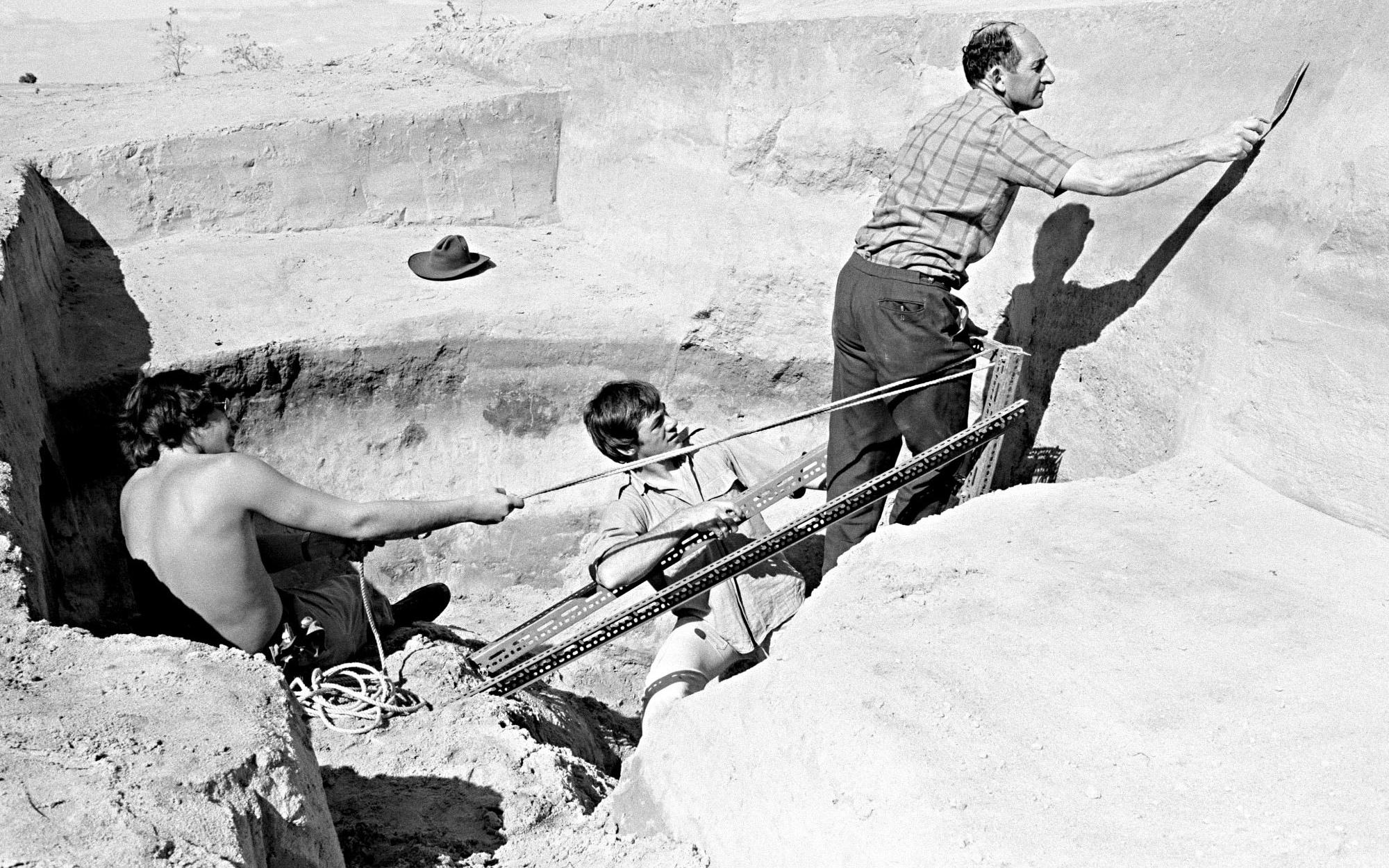
1.1 Lake Mungo archaeology dig
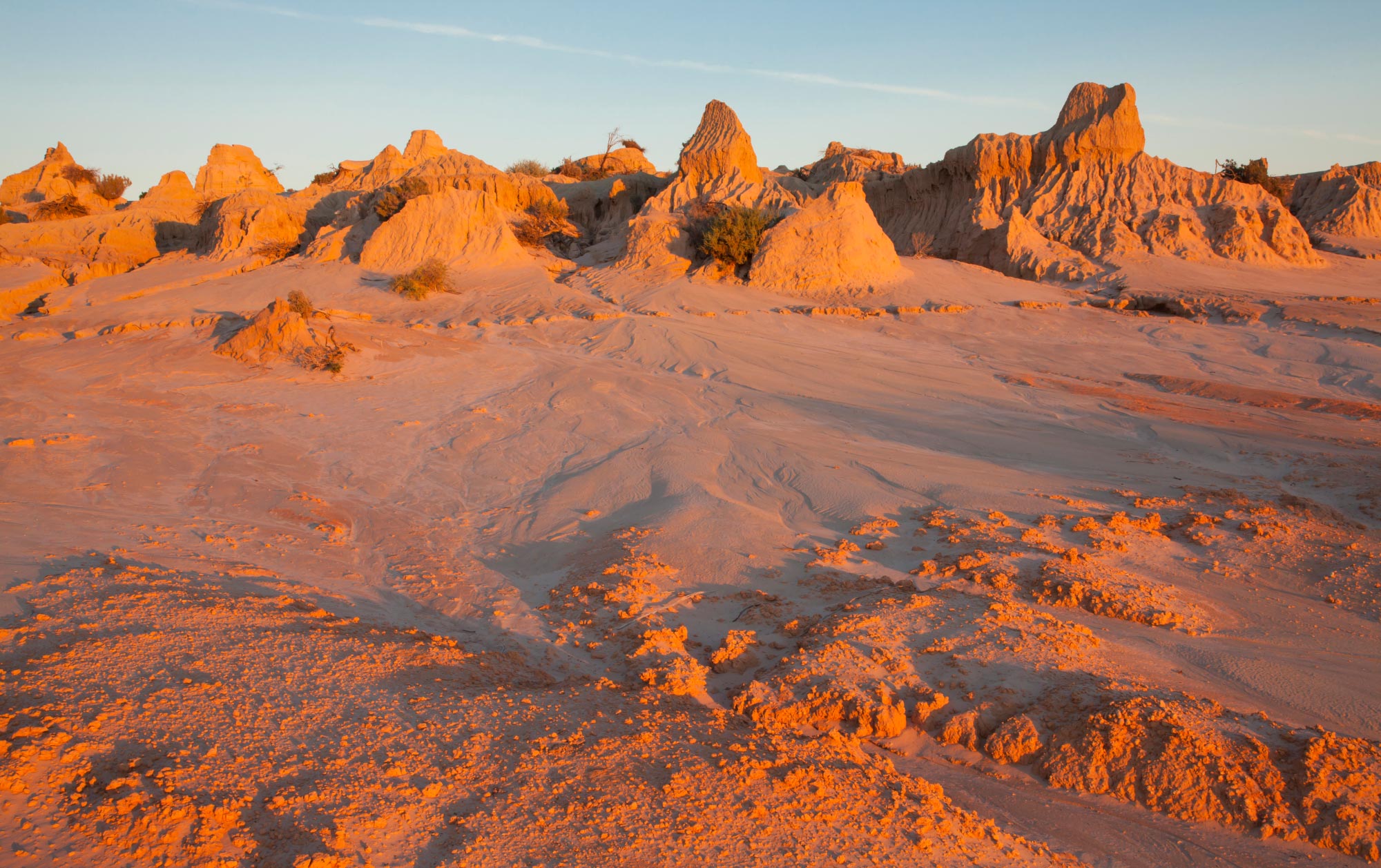
Photo: Ian Brown
Have you ever wanted to be an archaeologist? We have an interesting excavation for you!
Lake Mungo has revealed many special finds from thousands of years ago.
To begin, conduct some research by examining these resources 1968: Remains of Mungo Lady found and Uncovering ancient Australia – 1968: Mungo Lady found.
Once you have completed your background research, look at the 9 files below and investigate the deep time evidence to build your knowledge and skills as a trainee archaeologist. You can then submit an archaeologist’s report. Good luck with your excavation!
File 1: Location map
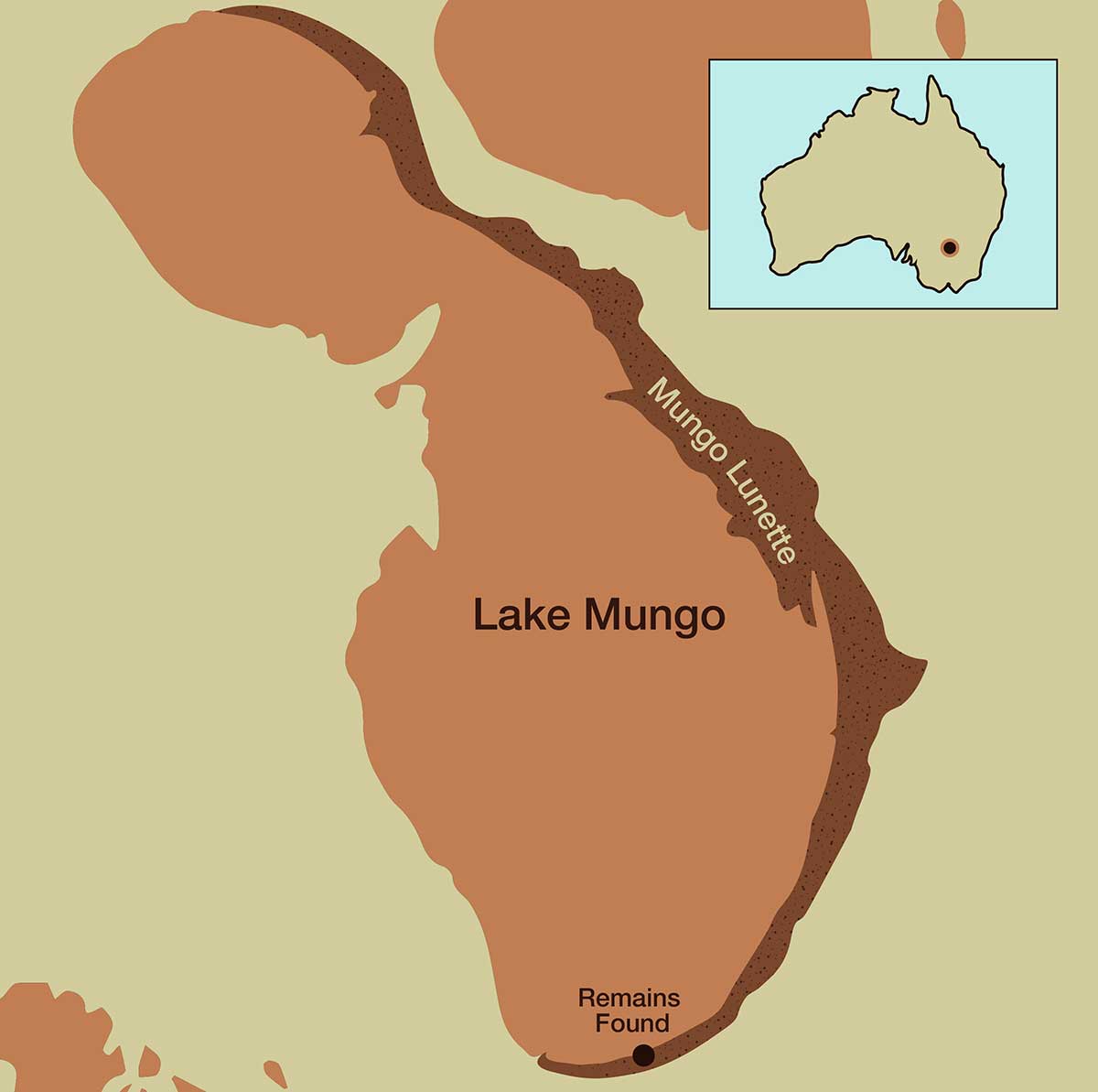
Mungo National Park, in western New South Wales, is known for its unique landforms, which have revealed a special story. The area is culturally significant to the First Nations people whose Country includes Lake Mungo.
It is where the remains of two very important people were recovered from the now-dry lake system. The two people were named after the location and are known as ‘Mungo Lady’ (more recently ‘Mungo Woman’) and ‘Mungo Man’. Mungo Lady was found in 1968 when a geologist spotted her ‘bones’ emerging from a lunette.
Eliane Touma
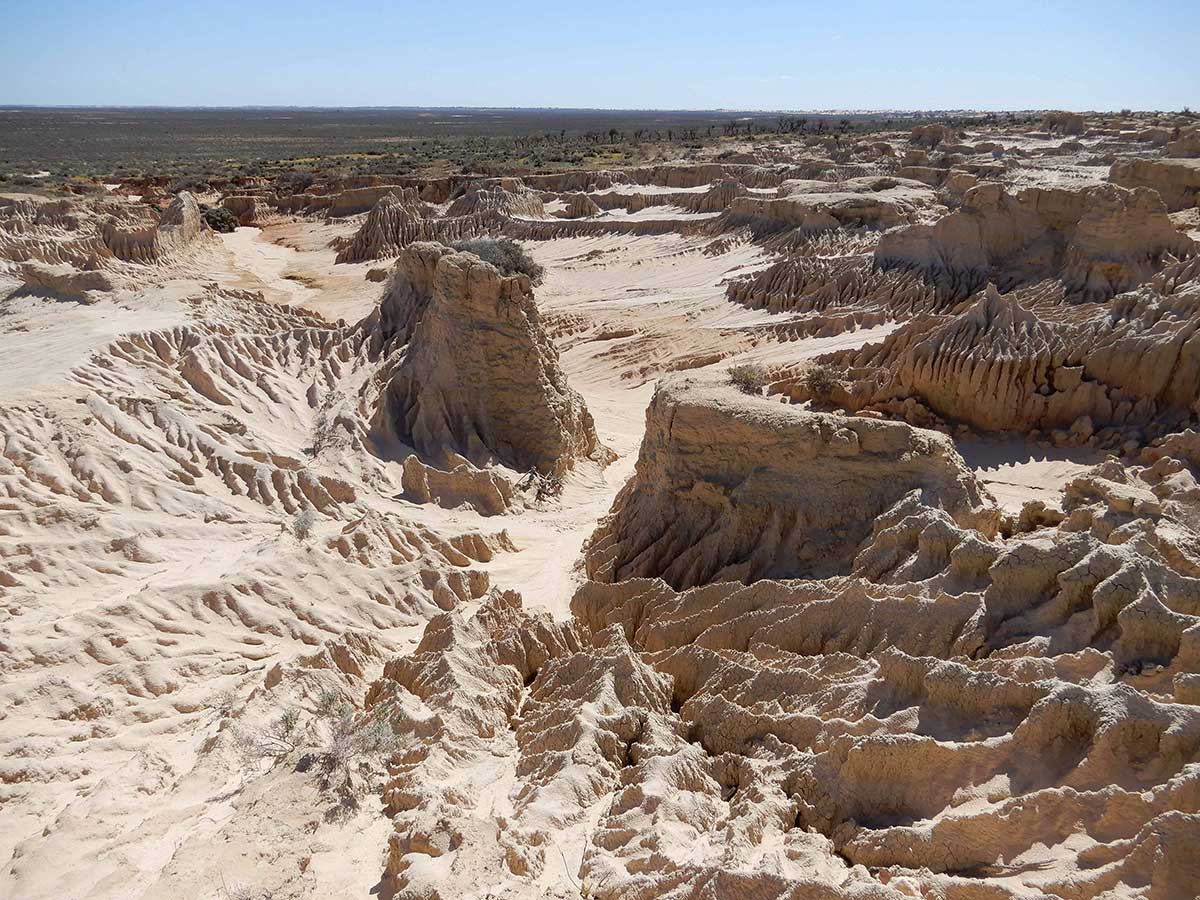
‘Lunettes’ are sand hills that are eroded dunes displaying major sedimentary layers.
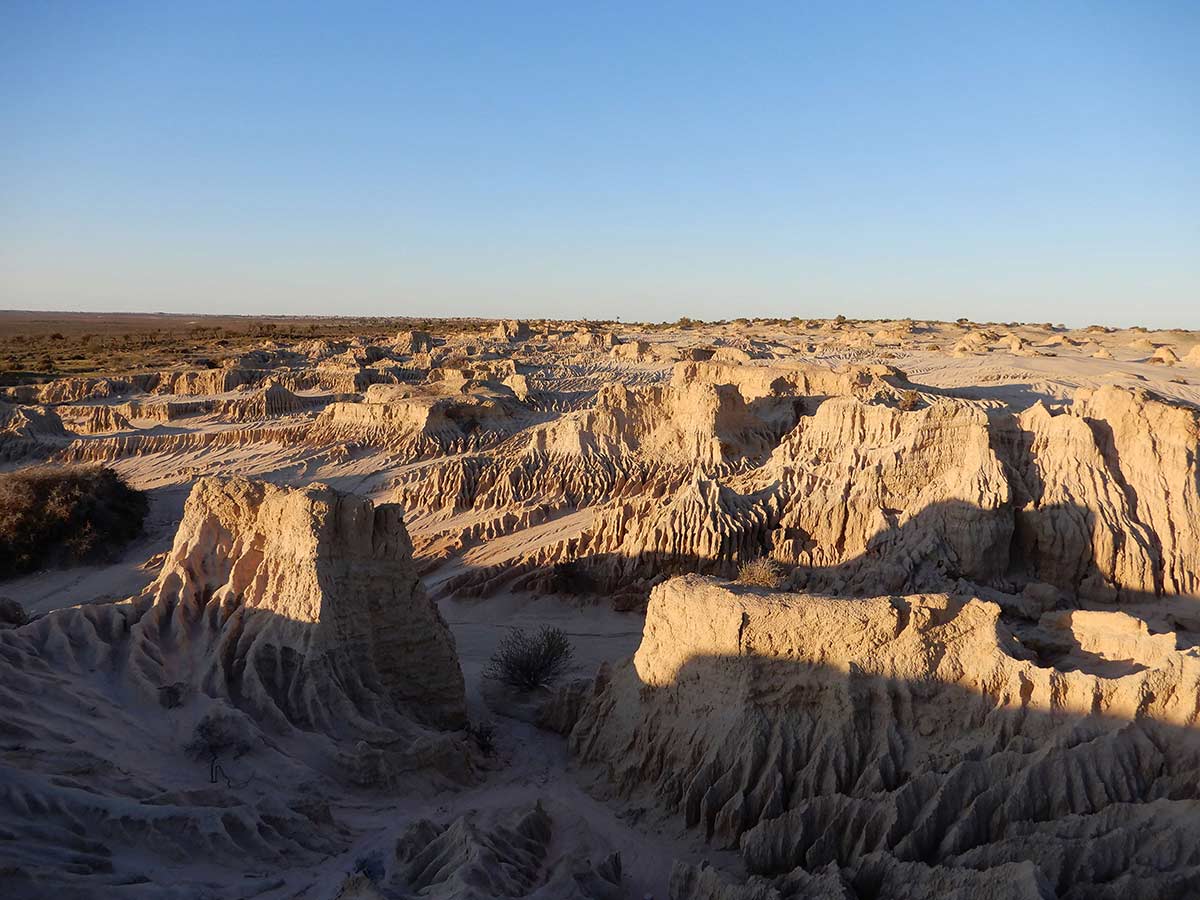
Photo: Eleanor Hilton
1. Using Google Maps, work out how far Lake Mungo is from you.
2. The nearest modern settlements are Wentworth and Mildura. Work out how far they are from Lake Mungo.
File 2: Soil report
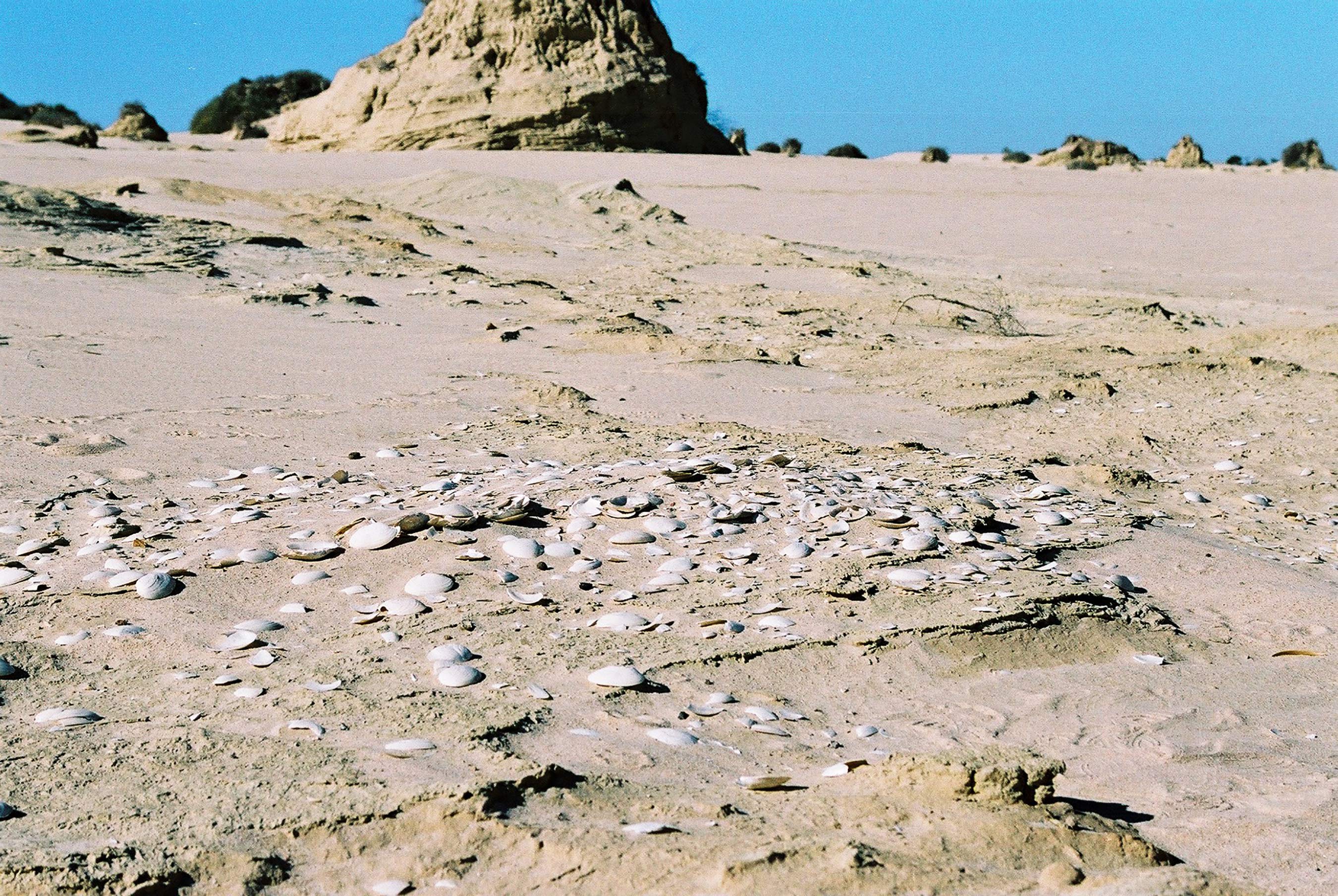
The soil near the woman showed traces of vegetation, fish bones and crustacean shells from a variety of freshwater species; a variety of native mammals, reptiles and birds; and ash from cooking fires. The fish and animals whose bones were found cannot live in the area today because the environment has changed.
Office of Environment and Heritage (New South Wales)
3. Why would the soil at Lake Mungo have been analysed? What can it tell us about ancient or deep time Australia?
4. Why would environmental changes affect animals’ ability to live in the area? How would this affect humans?
File 3: Archaeological discovery 1
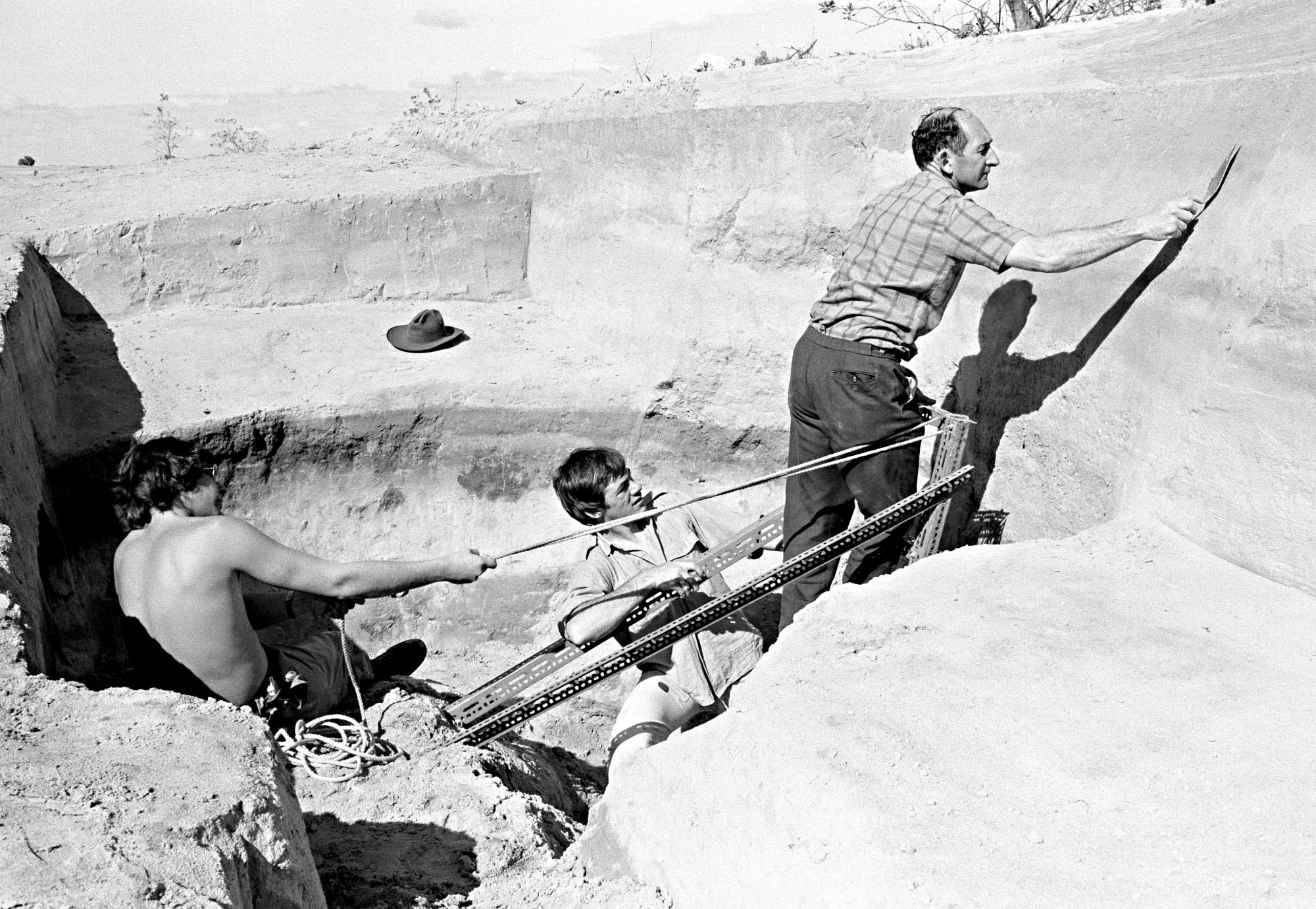
The first archaeological discovery at Lake Mungo was of human bones that had been crushed, burned, crushed again, burned again and finally buried. They were only found because the topsoil had eroded and winds had exposed them at the surface. The remains were of a young woman aged about 18 years old when she died. No cause of death has been determined.
National Archives of Australia: A6180, 23/8/74/3
5. Why might the bones of a person be treated in this way?
6. Does the burial process tell you anything about the people who inhabited the area in ancient or deep time Australia? Why or why not?
File 4: Archaeological discovery 2
The second archaeological discovery was of a body that had been buried intact. It was a man who was about 50 years old when he died. He was buried neatly, with a deposit of ochre – often used in ceremonies – spread over his chest. In one arm the bones had been worn down – most likely due to the action of regularly throwing something over a long period of time. The damage would have caused the man great pain from arthritis.
7. Why do you think the man was buried differently to the woman?
8. Does this form of burial and the condition of the man’s bones tell you anything about the people who inhabited the area in ancient or deep time Australia? Why or why not? You may need to do some further research to fully answer this question.
File 5: The scene of the discovery
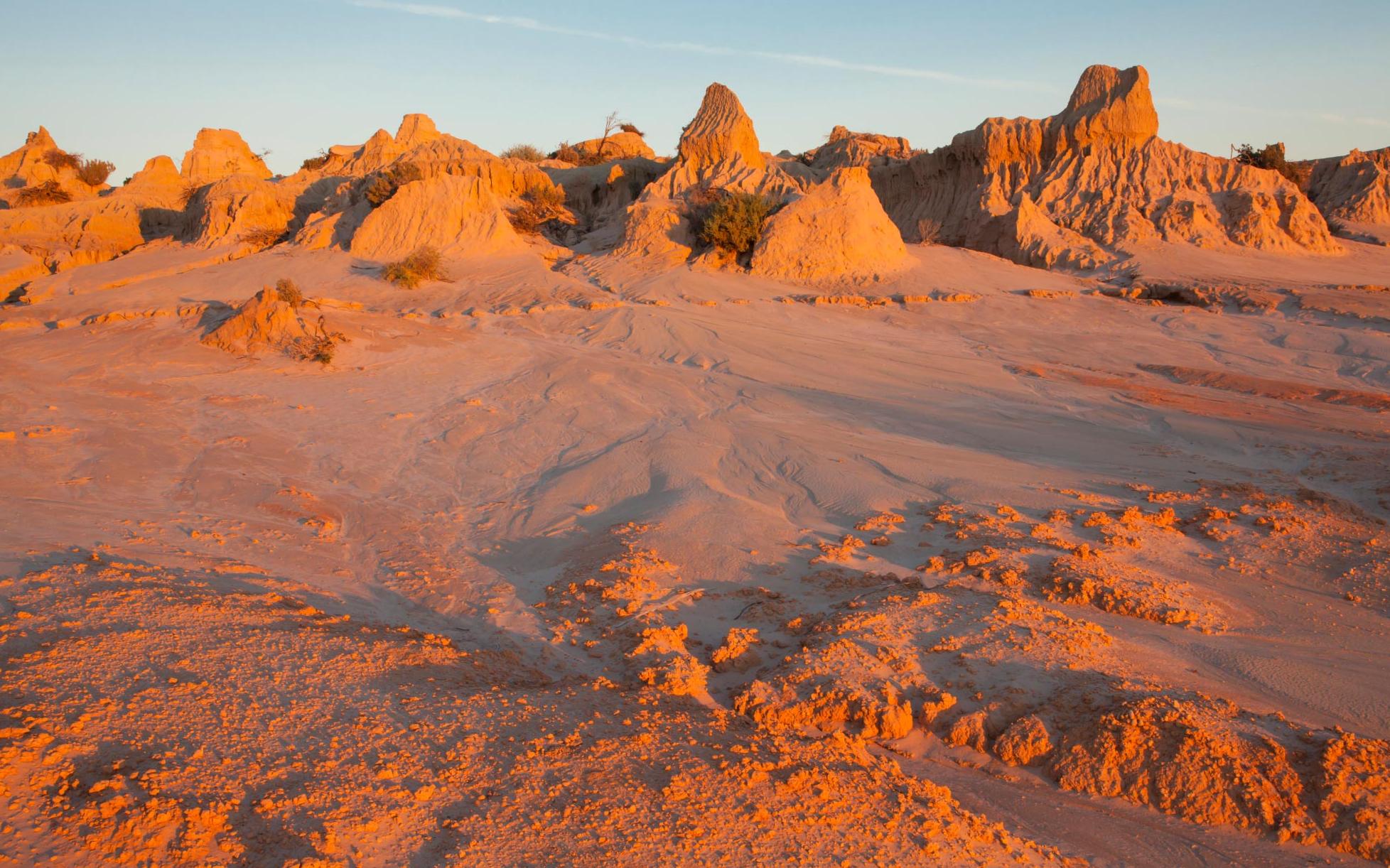
This is what the area is like today.
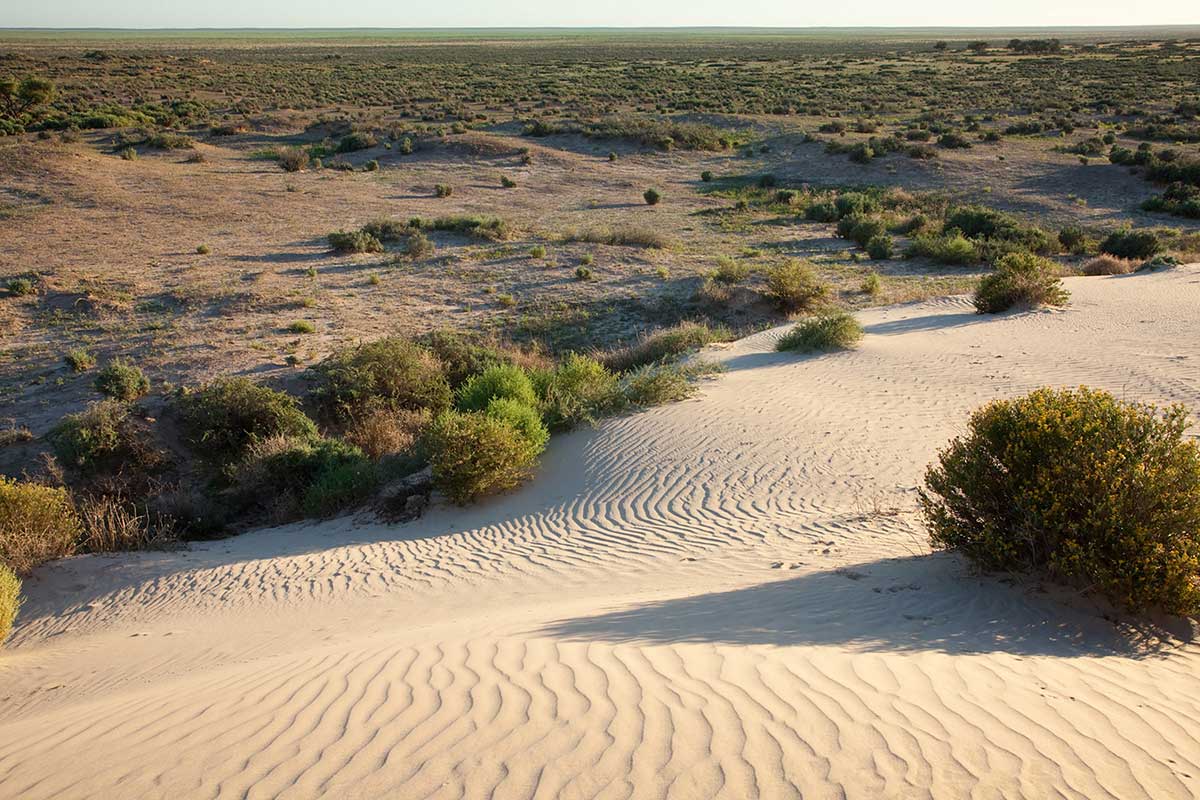
9. Describe Lake Mungo as it looks now.
10. Do you think people could live there permanently in large groups today? Why or why not?
11. What is the purpose of comparing Lake Mungo in modern times to Lake Mungo in ancient or deep time? What can we learn from this comparison?
File 6: Ochre report
This is a piece of ochre. It is soft rock with colouring caused by the minerals in it. It can easily be crushed and made into a powder. Naturally occurring ochre is not found in the area. The nearest deposit is several hundred kilometres away.
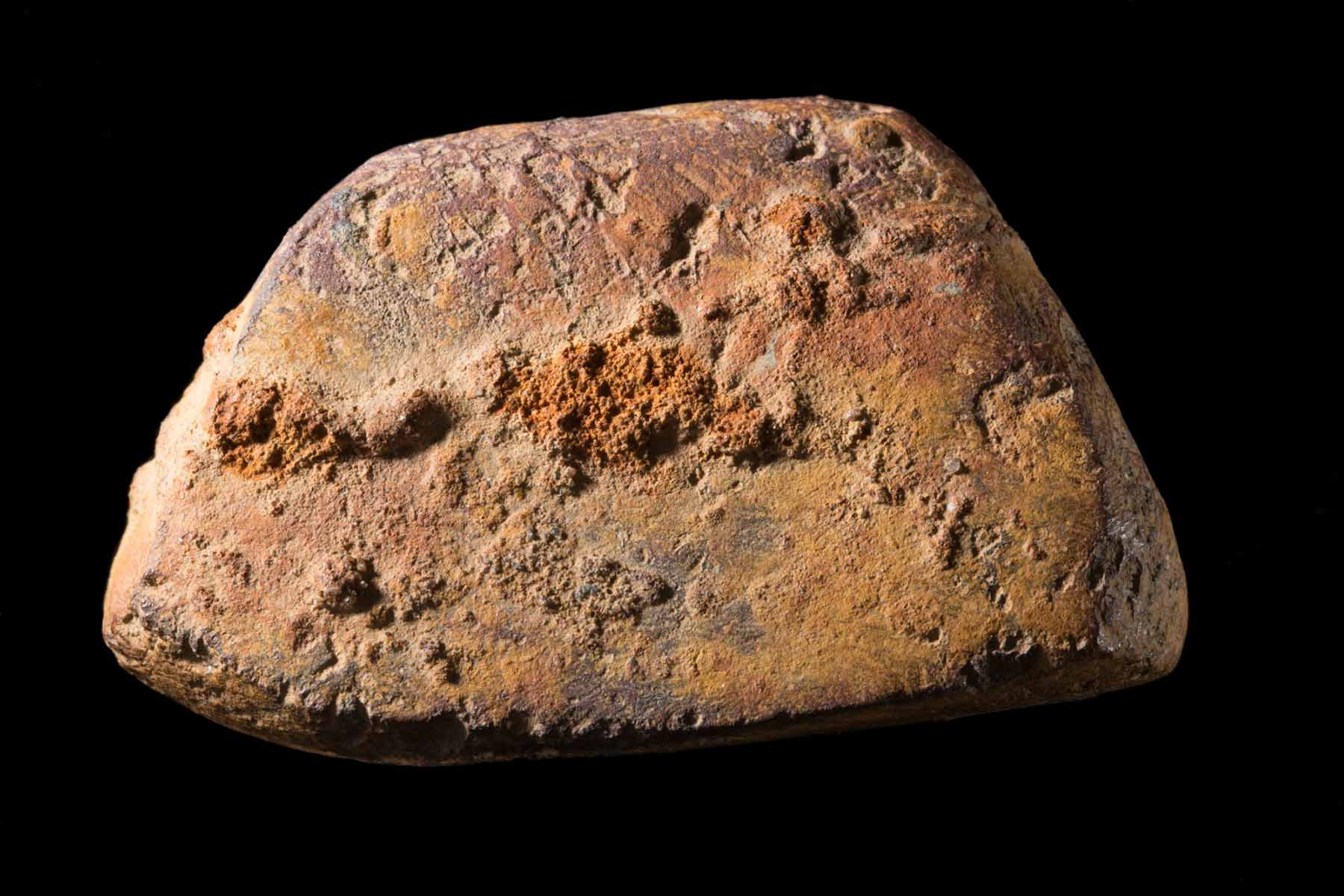
12. What does the discovery of ochre at Lake Mungo tell us about life in ancient or deep time Australia?
13. Why might ochre have been spread over the bones?
File 7: Dating report
The human and animal bones, and all the organic materials found by archaeologists at Lake Mungo, have been through a radiocarbon dating process. This process analyses the amount of radiocarbon (carbon-14) in the remains of organisms. Because carbon-14 decays at a consistent rate, we can date remains and identify how old they are. The scientific dating process gave an age of about 40,000 years for the human and nearby animal remains.
14. How has the process of carbon dating helped us learn about the human remains and the Lake Mungo area?
File 8: Stratigraphy
‘Stratigraphy’ means studying layers.
The surface of the earth is constantly changing. Wind and rain cause erosion and the movement of soil. Over time, what used to be the surface gets covered over by a new layer of soil or sand. New layers are constantly forming and pushing down the oldest layers.
There are three major layers of soil in the lunettes at Lake Mungo. The oldest layer is the red Gol Gol soil at the bottom. Next is the grey Mungo layer, which was formed 25–45,000 years ago. The pale brown Zanci layer is on top and was formed 15–20,000 years ago.
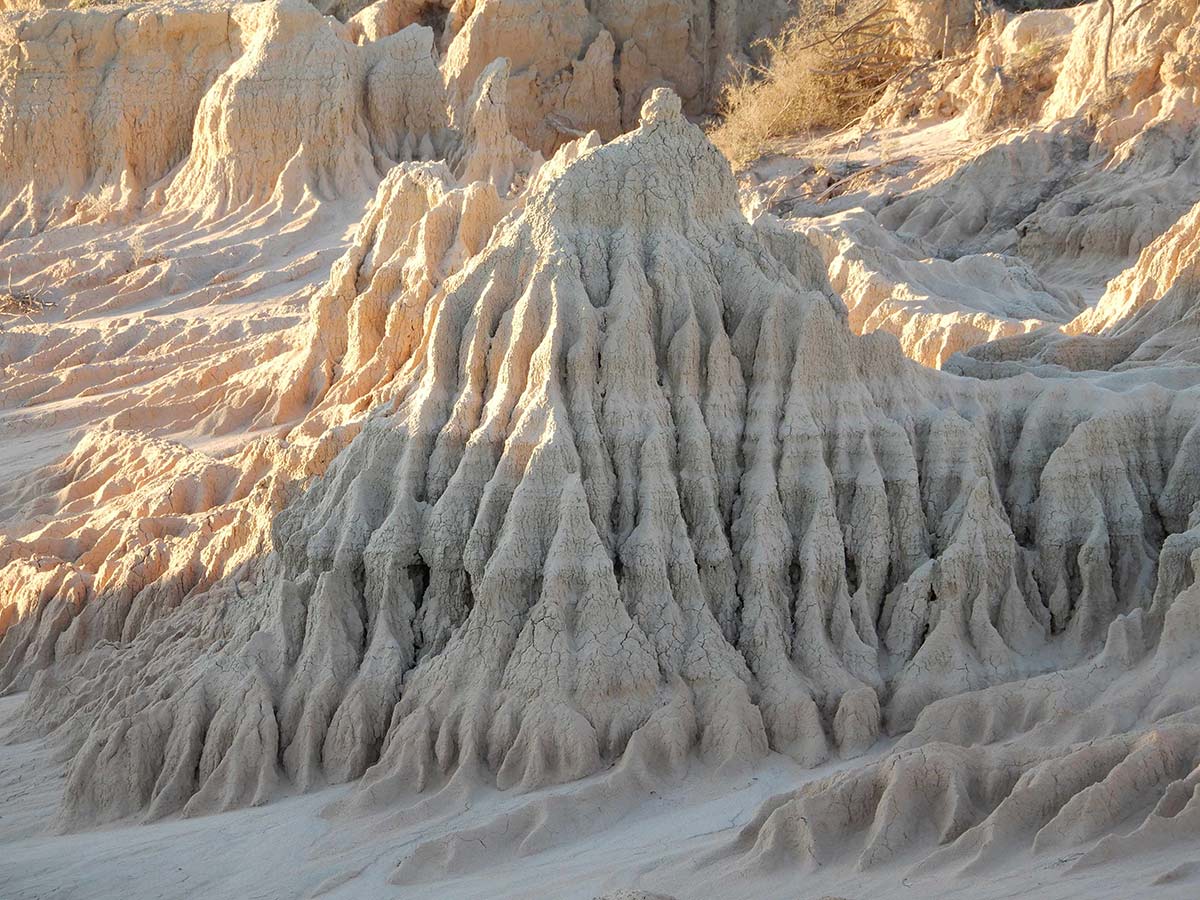
Photo: Eleanor Hilton
By identifying the level at which the human remains were found, we can tell when they were buried and what was happening in that area at that time. In this case, there was a great deal of animal and plant life at the level at which the bodies were buried. There was also evidence of food and cooking, fireplaces and stone tools.
15. In which layer were the human remains found?
16. How would stratigraphy help us learn about life at Lake Mungo?
17. How might unregulated digging affect the layers?
Evidence file 9: Climate analysis
Climate studies show the area where the remains were found has undergone many climate changes that have affected the environment and habitat.
By 150,000 years ago, the Willandra Lakes had formed in low-lying basins and were filled with water from the mountains to the east. Sand blowing off wave-formed beaches on the eastern shores of the lakes began to build lunettes.
A period of wetter climate and abundance arrived about 60,000 years ago. Rainfall in the Great Dividing Range sent the Lachlan River down the Willandra Creek channel to fill the lakes. For the next 20,000 years the lakes were full, the climate was stable and natural resources were plentiful.
Archaeological evidence dates the appearance of the first humans in this area at around 40,000 years ago, although from a First Nations perspective people have always been in Australia since the land was created. At that time, the western dunes were vegetated and stable, and the lakes were surrounded by woodlands.
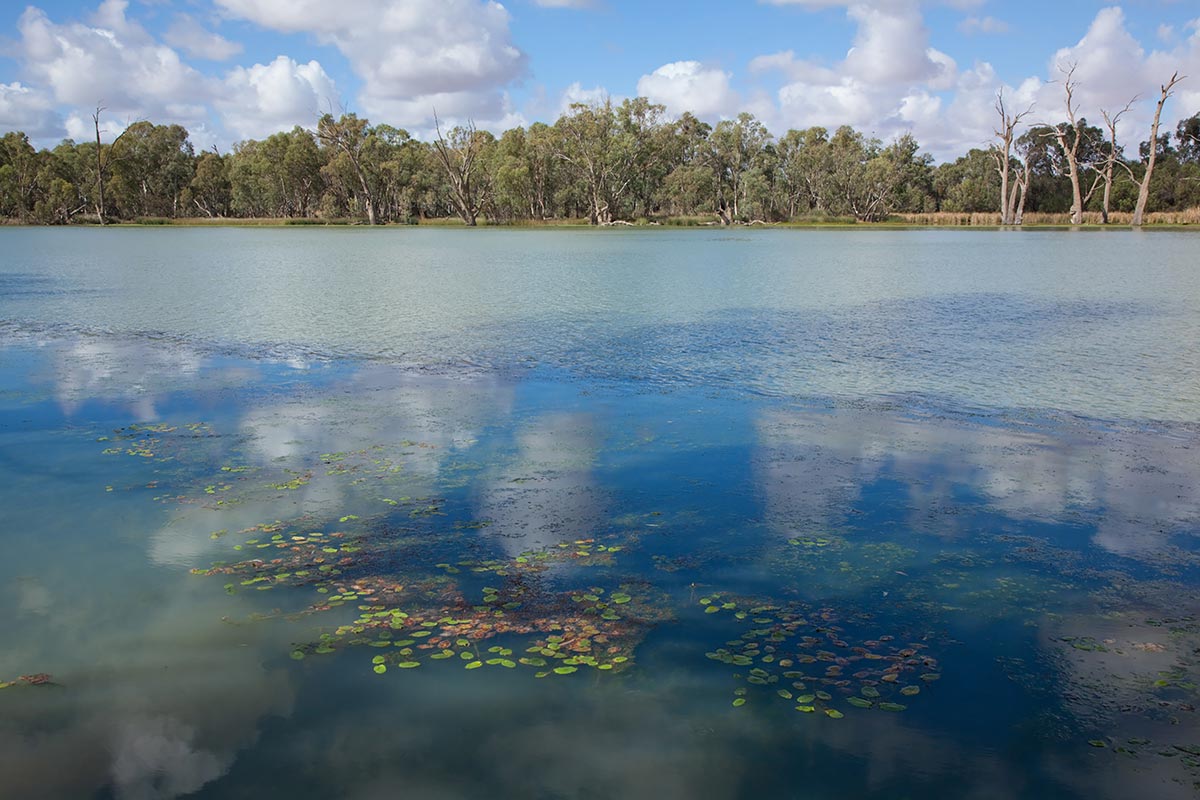
Photo: Ian Brown
About 22,000 years ago, the climate entered a colder and drier glacial phase. Amid more fluctuations, the lakes began to gradually dry out. By 10,000 years ago the climate had become similar to today's and has remained relatively stable. Vegetation continued to adapt to the conditions in the semi-arid climate.
There was not a constant water source, so people could not live there permanently. Europeans colonised in the Willandra area about 160 years ago, bringing sheep, cattle and other introduced animals in large numbers. This had a negative impact on vegetation and lunette erosion accelerated.
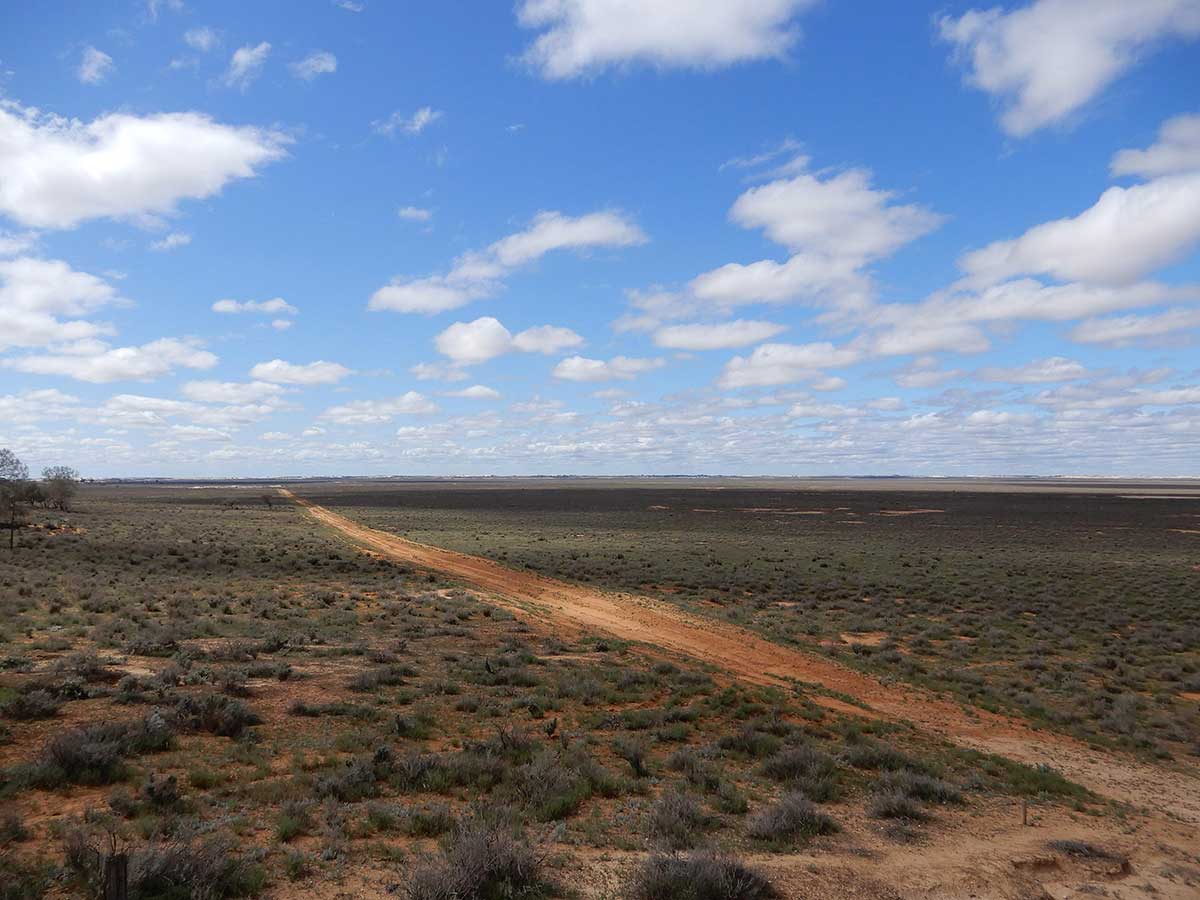
Photo: Eleanor Hilton
18. According to climate analysis evidence, why did First Nations people arrive in this area between 60,000 and 20,000 years ago?
19. Why does change in climate over time affect the ability for humans to live in a particular area?
You can now complete your report.
Archaeologist’s report
21. Why do you think the bones found in archaeological discovery 1 went through several stages of processing before being buried? Provide links to support your answer.
22. Why do you think the bones found in archaeological discovery 2 were intact? Provide links to support your answer.
24. What could be the reason for the difference in how the bodies had been buried?
25. Do you think the two people buried at Lake Mungo lived there permanently or were nomadic? Explain your answer.
26. Why would First Nations people have lived around Lake Mungo 40,000 years ago?
27. Why might fewer people live around Lake Mungo today?
28. What does the evidence found and analysed at Lake Mungo show us about human occupation of Australia? Include as much detail as you can.